The Well
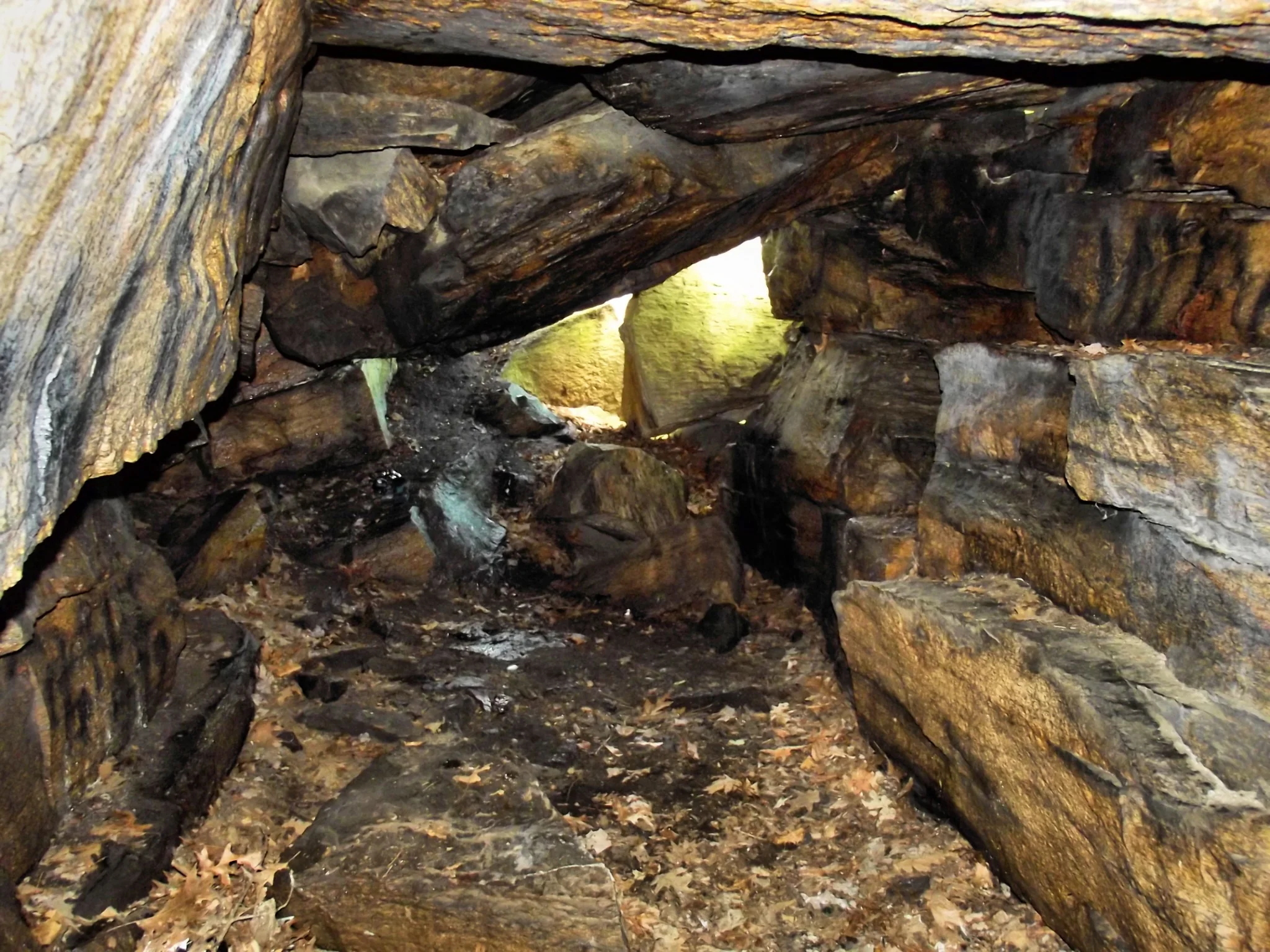
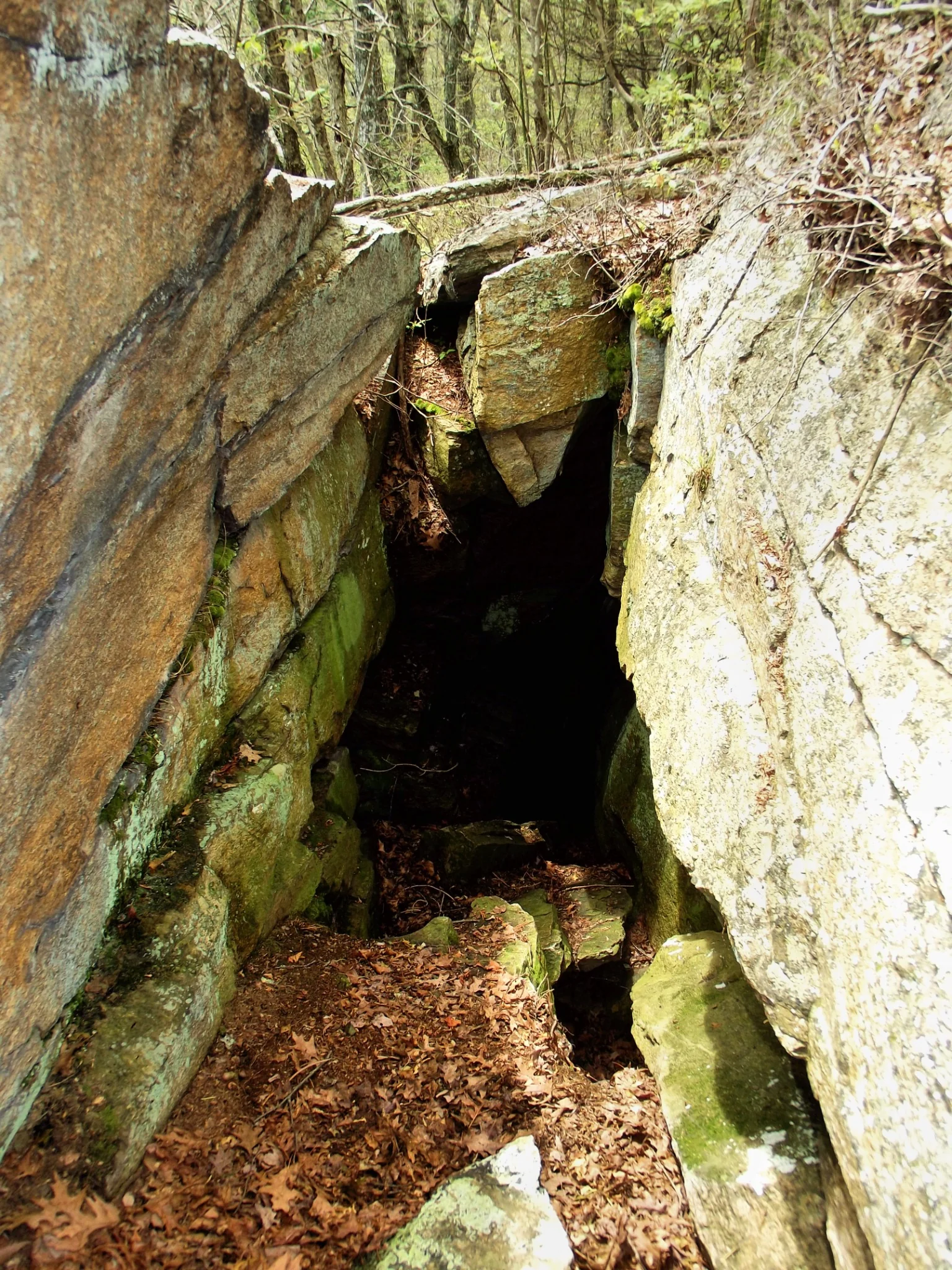
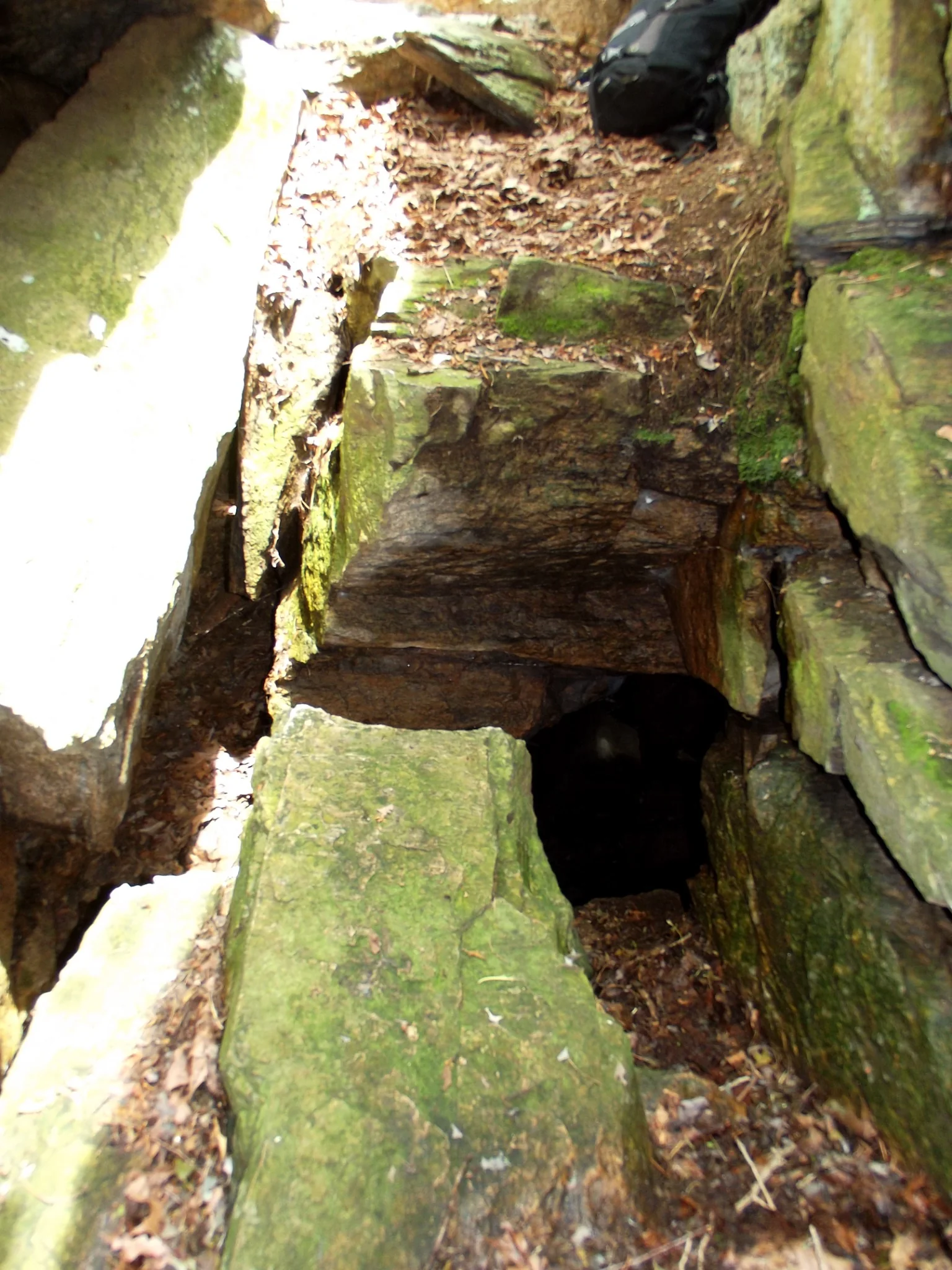
The talus cave found on the first visit, with a higher pit opening connecting to its lower entrance.
Plainfield, Connecticut · Historical caves
Three visits to one familiar ledge. An old map, four caves, and the discovery that the first answer was only the beginning.
Follow the story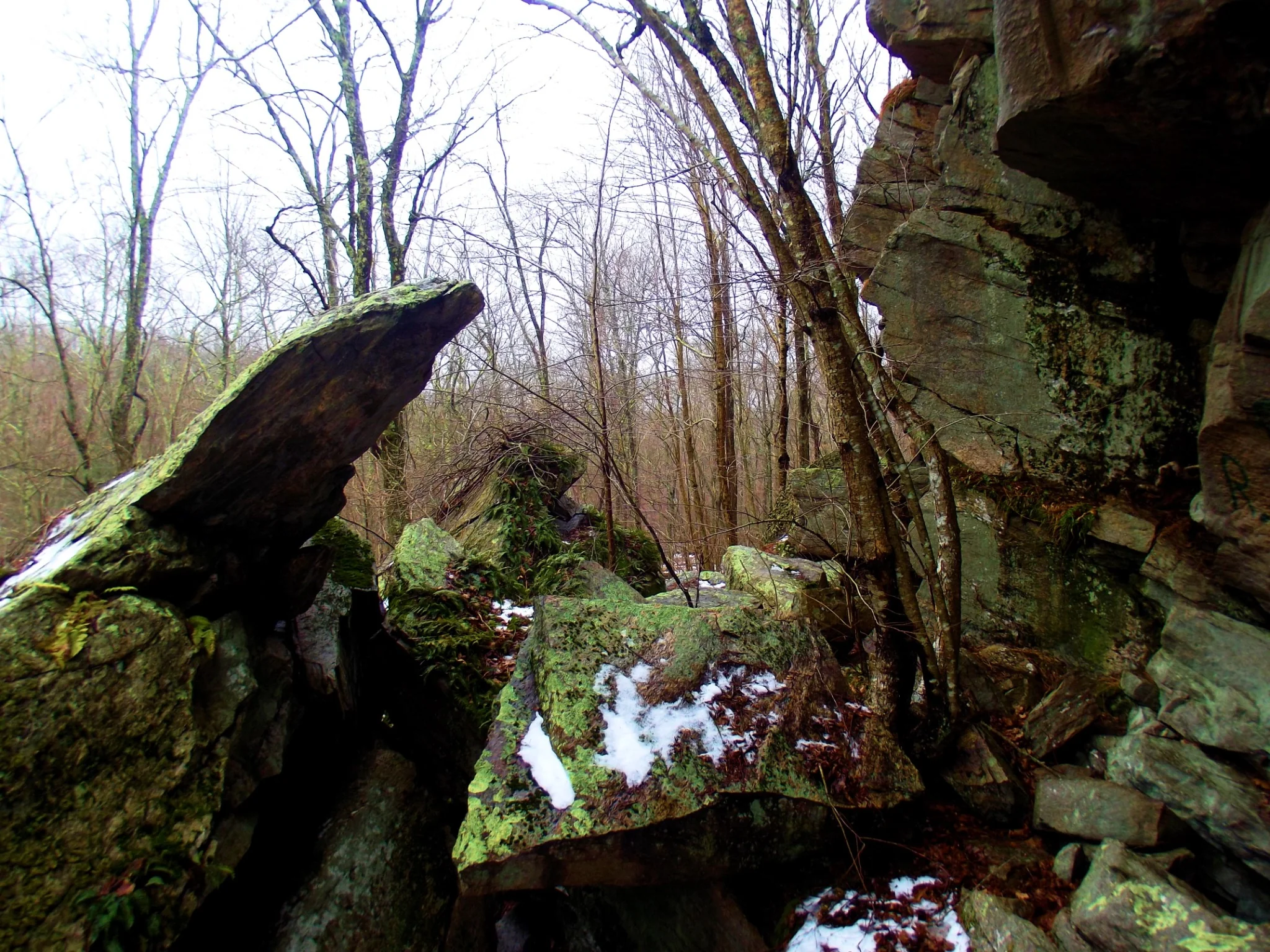
A place passed by
The name survived on maps and postcards. The passages behind it took more than one search to understand.
01 / The first visit
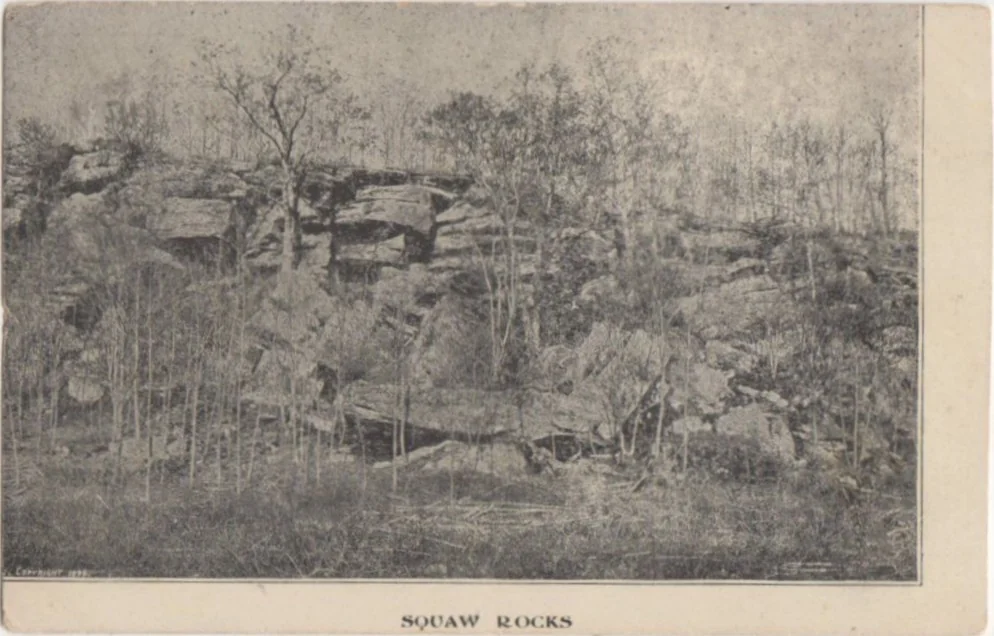
I had read of a cave in a long Plainfield ledge historically known as Squaw Rocks. Its geology and the history attached to it were enough to send me looking.
Adrienne and I found the ledge and, before long, a remarkable series of spaces among its fallen blocks. We explored the talus cave and believed we had found the place described in the old accounts. I wrote up the visit as a finished search.
That first discovery was real, but my identification was premature. The passage we had entered belonged to a cave later identified as The Well. Its opening higher in the talus drops into the same system. We had found part of the Seven Wonders without yet understanding how its pieces fitted together.
The archival turn
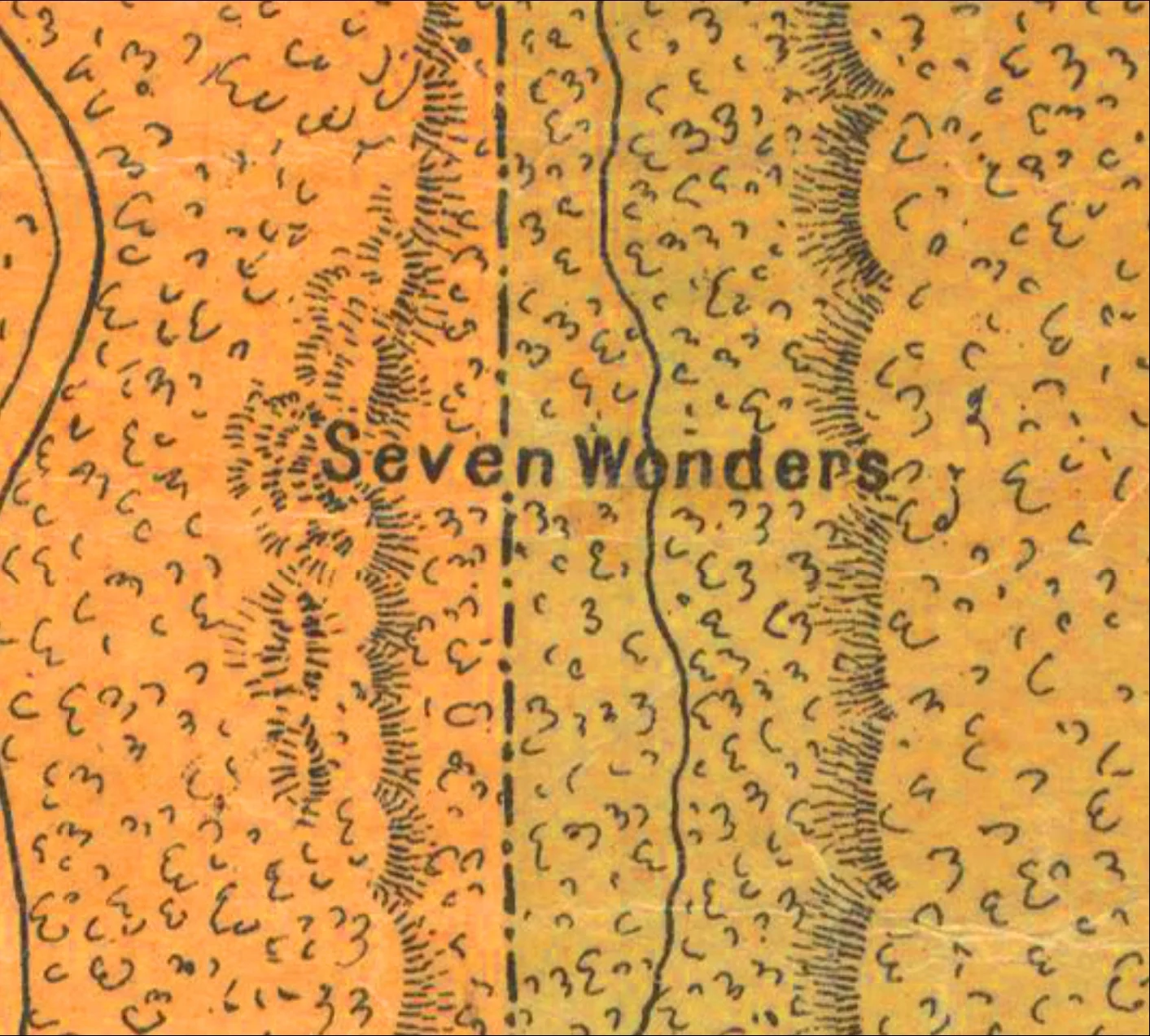
Several years later, my friend Jim Moore, who also researches historic caves, asked to see the site. We came in from another direction. After that visit he sent me two discoveries from the archives: an 1892 Baldwin map labeling the ledge “Seven Wonders,” and a detailed 1895 account in The Graphic, Vol. 1, No. 3.
The article described four caves at the ledge. Its directions made clear that the cave Adrienne and I had found was not the elusive Kitchen. Instead of closing the case, the older description gave us a way to test each opening against a physical feature.
“Seven Wonders” names the ledge in these sources; the 1895 account describes four caves. The historical name for the rocks and one cave is retained here only when discussing those records.
02 / The return with Jim
On our return, Jim noticed fractures near the north end of the ledge as we passed. We examined the cave I already knew, then came back to the openings that had caught his eye.
One fracture climbed into a sizable chamber and led to a second entrance above. That paired route matched the 1895 description of a cave with two openings into a room. I call it Two-Way Cave.
The other descended to a chamber and continued through a turning, narrow passage. It matched a different cave in the old account, described as extending an unknown distance. I call it Unknown Cave. They are separate features. We had walked past them on the first trip, close enough to see the rock and still miss what it held.
Once again I thought the ledge had given up its last surprise. Jim’s newly found copy of The Graphic showed otherwise: one cave was still unaccounted for.
03 / The final search
The 1895 directions placed the remaining cave high in the cliff, well hidden near a feature called Devil’s Coffin. I returned a third time and searched along the upper ledge, leaving behind the entrance I had once mistaken for it.
Devil’s Coffin was unmistakable: a great slab leaning against the rock, its shape visible from the ravine. During the search a muffled barking sound seemed to come from somewhere in the cliff. Vultures lifting from the rocks explained the brief, strange interruption before the search continued.
Just south of the slab, I found the fissure. Below it an opening led into the cave the old description had pointed to all along: Old Lady’s Kitchen, also called Squaw’s Kitchen in historical sources.
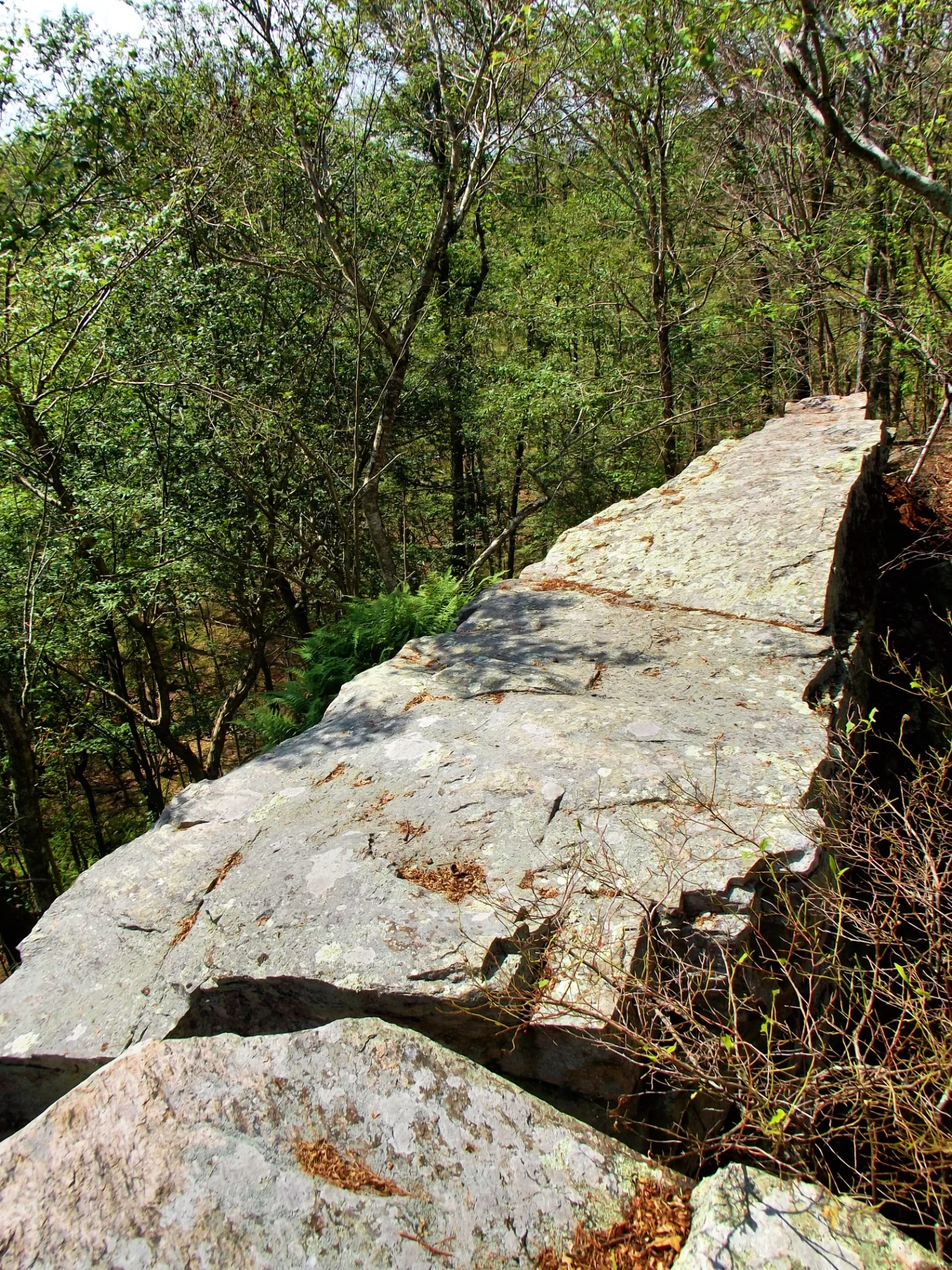
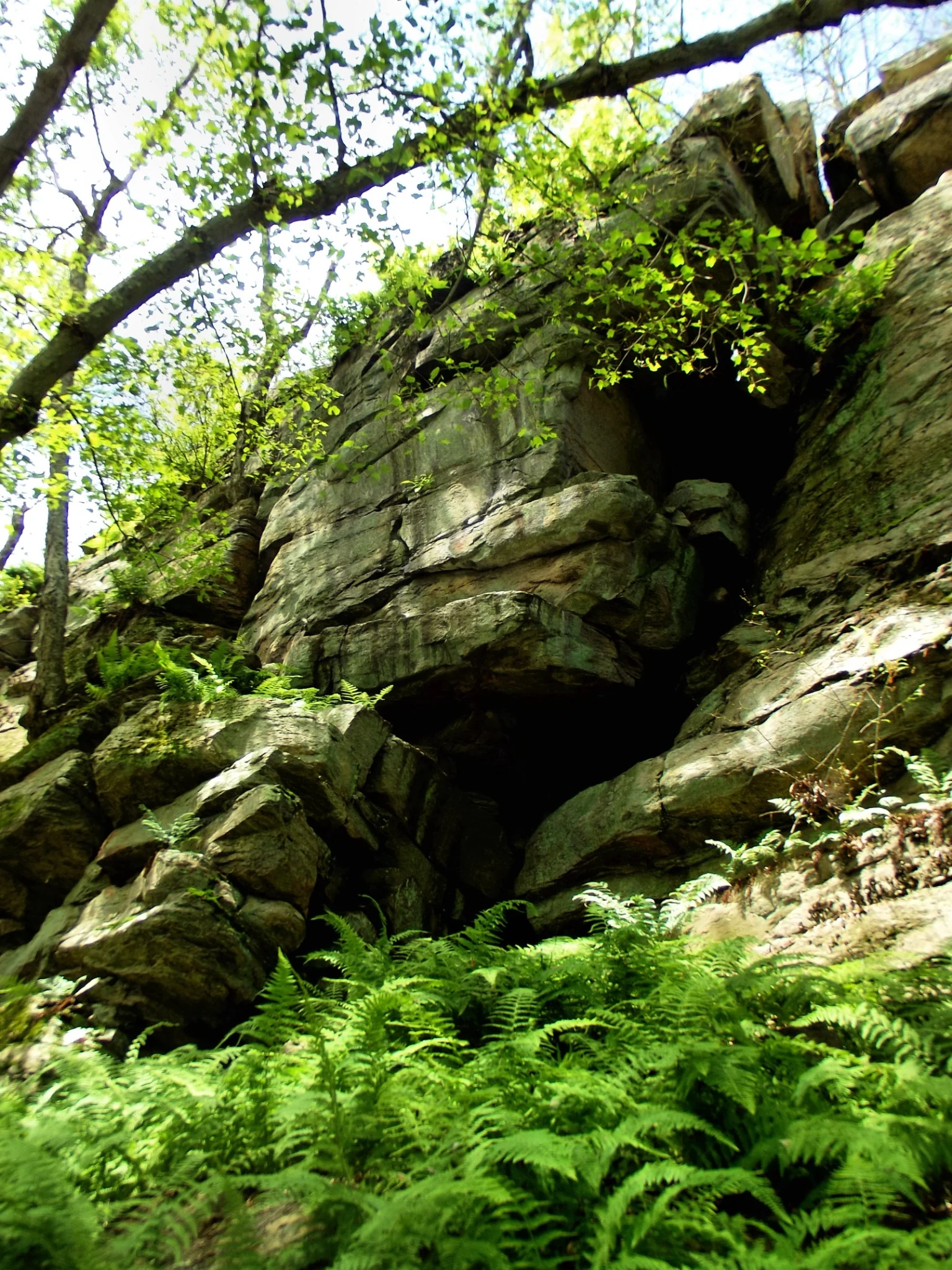
The entrance was there all along. The historical description made it legible.
Inside the Kitchen
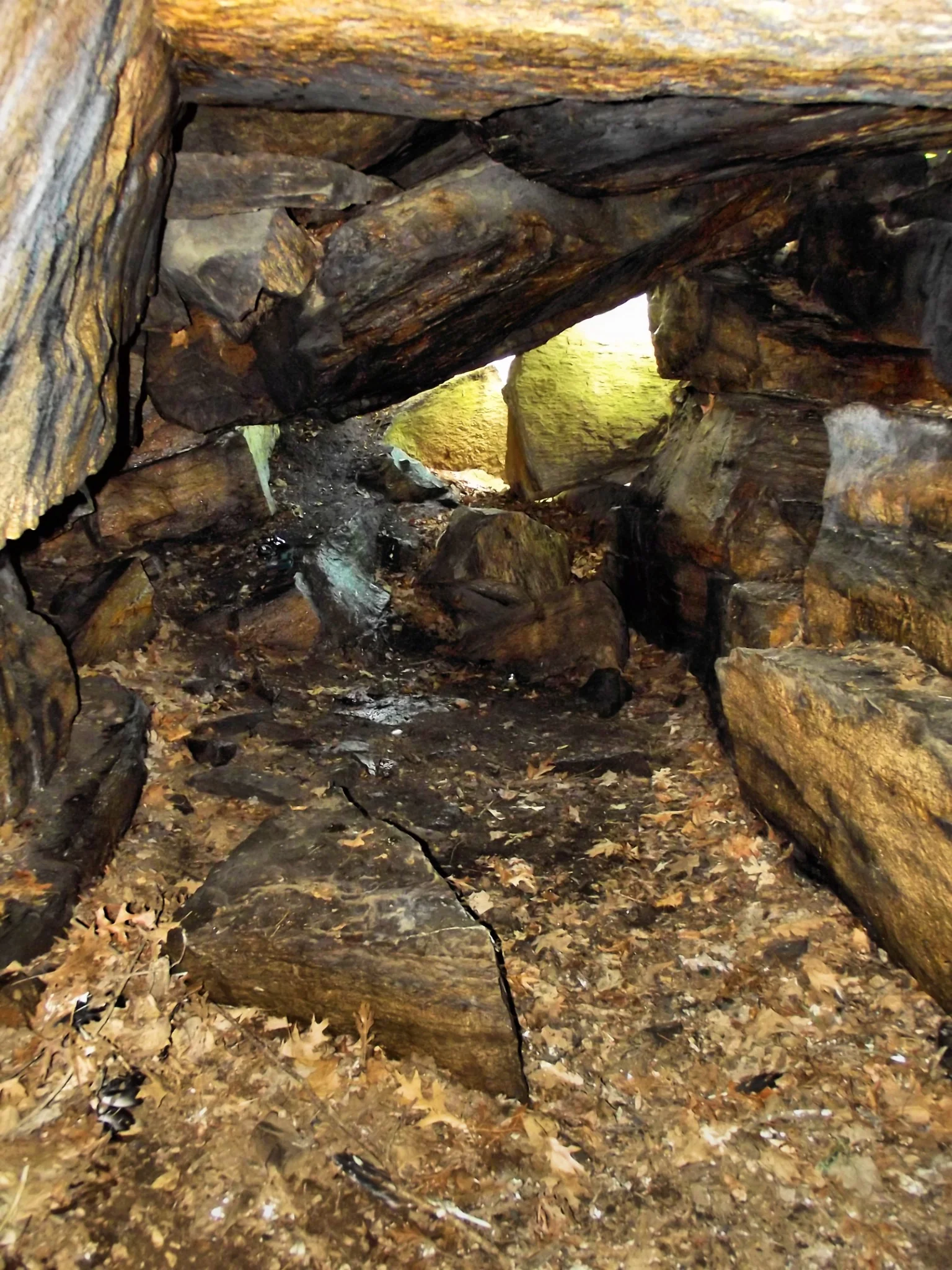
Inside, connected chambers and tight passages opened toward a window on the valley. This was a more complex place than the first opening had suggested.
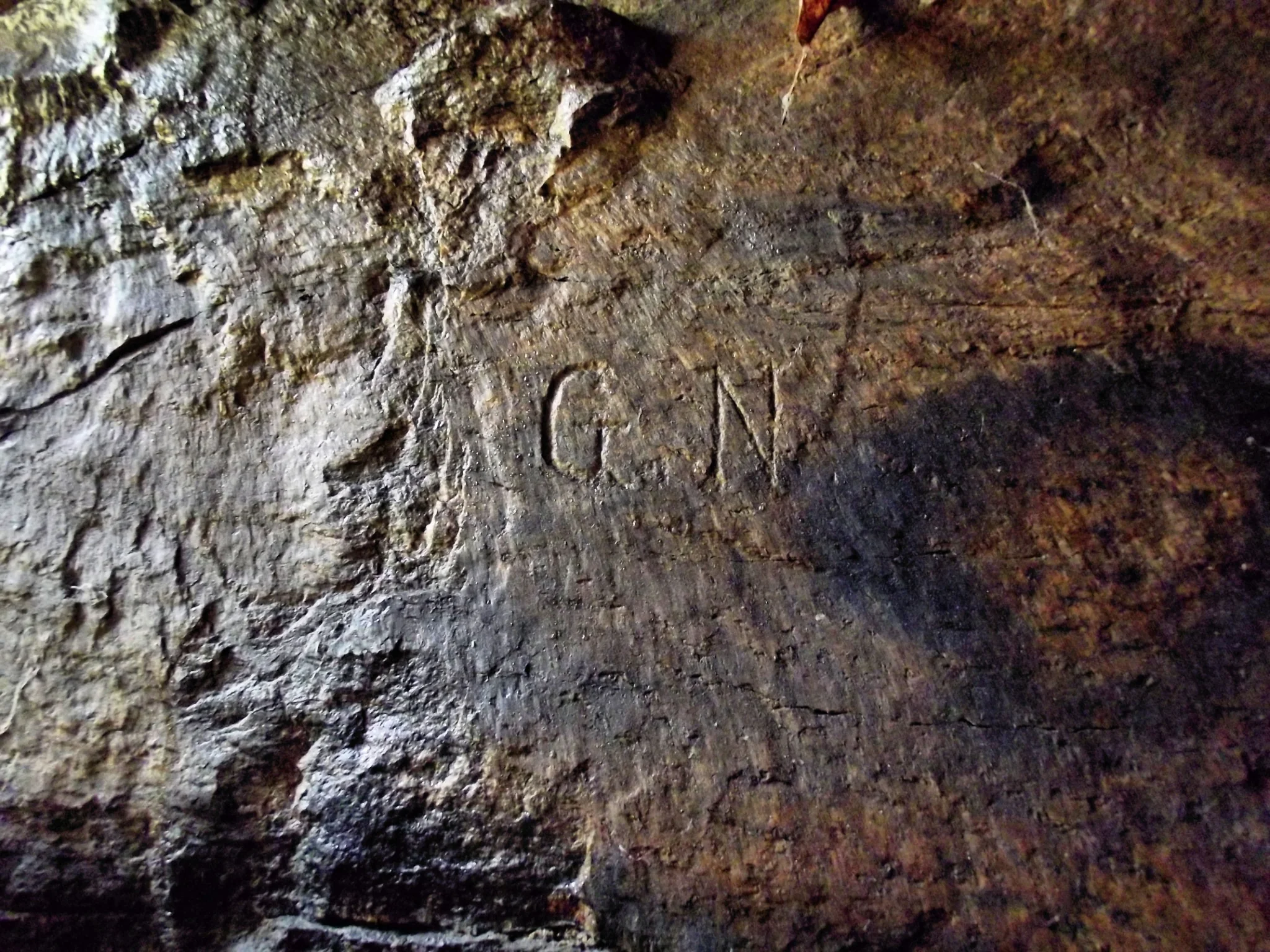
A low chimney led between spaces. The rock showed blackening from fires, and a ring of stones lay partly buried on the floor. Initials, “GN,” had been cut into the granite. These traces show that people had spent time here, but they do not by themselves identify who made them or when. The initials remain an unanswered question.
Standing in the cave, I could compare its position, hidden character, and passages with the 1895 description. I am confident in the identification of the four caves. It took the map, the detailed account, and three visits to replace the attractive first guess with a more complete reading of the ledge.
Reading the ledge
The talus cave found on the first visit, with a higher pit opening connecting to its lower entrance.
A fracture cave with two openings leading into a chamber, matching the article’s paired entrance description.
A distinct fracture system whose chamber and narrow continuation fit the separate passage in the account.
The concealed cave higher in the cliff near Devil’s Coffin; also named Squaw’s Kitchen in historical records.
What we walk past
People had known this ledge for generations. It appeared on maps and postcards, and earlier visitors had written about its caves. Yet even with that history in hand, the answer changed each time we approached from another direction. Discovery here meant returning, reading more carefully, and allowing the rock to correct the story I had first told about it.
Read the related field note →Field record & sources
Based on Michael Girard’s account, “The Seven Wonders,” Northeastern Caver, September 2017, pp. 87–89, and his recollection supplied for this page. The 1892 Baldwin map and The Graphic, Vol. 1, No. 3 (1895), are the historical sources discussed in that account. Field photographs by Michael Girard. The image makers of the archival map and postcard are unidentified; see the image credits.
All expeditions ↗